Electric underfloor heating in Blue Mountains
We install electric underfloor heating across the Blue Mountains, where homes sit higher than in any area we cover. Katoomba's station sits just above a thousand metres and averages 2.6°C on July nights, with July afternoons reaching only 9.5°C. Separate houses are 92.1% of homes here, so a whole room or a whole floor is as ordinary a job as a bathroom. More is spent renovating here than in any area outside the eastern and northern suburbs. So under tile heating mats and in screed heating cable are most of what we install here.
The benefits of electric underfloor heating in Blue Mountains
Separate houses are 92.1% of homes here, which is the highest share of any area we have written up. Two of the reasons below come from a rule that starts this month. Everything else follows from the thousand metres of height these towns are spread across.
A new home here is built without indoor gas
Council's plan says gas cooktops, gas ovens, gas space heating and gas hot water are not to be included in a new home. It applies to applications lodged after 1 October 2026, and electric systems have to be marked on the plans instead. In slab and in screed heating cable both answer that rule as they stand, with no flue and no plant room.
The coldest July nights of any area we cover
Katoomba averages 2.6°C on July nights and Mount Boyce above Blackheath records 40 nights a year at or below 2°C. Under tile heating mats warm a cold tile floor sooner than either cable, because there is little mass over them. The benefit is that our thermostats bring the floor heating on before anyone is awake on a Katoomba morning.
The energy rating zone changes inside this area
The building code puts the whole area in one climate zone, but the energy rating scheme does not. Faulconbridge and everything west of it is modelled on Canberra's zone, and the lower mountains on Richmond's. That lifts the modelled heating allowance for a slab from 56 megajoules per m² a year to 117. The benefit of in screed heating cable in the upper mountains is the extra mass, which holds heat long after the circuit stops.
Winter is the cheap season on this network
This area sits entirely on the Endeavour network, where April to October is the low season and summer the high one. The peak window is 4pm to 8pm on business days, and a cheaper window runs from 10am to 2pm daily. Endeavour's own controlled load tariff names under floor heating among the things that circuit is for. The benefit is that in slab or in screed heating cable takes power overnight on a controlled load circuit and holds it.
A slab is not allowed on the steeper blocks
In screed heating cable is the usual answer on a steep Blue Mountains block, because the floor is rarely concrete. Council's plan says slab on ground construction is not to be used on slopes steeper than one in ten. Above one in five it asks for a split level design and a raised floor over a protected underfloor. The benefit is a heated timber floor over open air, with the insulation under the cable doing the holding.
On a listed house the floorboards are the question
There are 816 heritage items here and 173 of them list interiors as well as the outside. Upgrading a bathroom and laying a new floor covering both sit on Council's list of work needing no application. The benefit of under tile heating mats is that they go into the tile bed without the floorboards coming up. Taking up the boards is not on that list, and nor is wiring that breaks into a lining.
What we would install in Blue Mountains
Separate houses are 92.1% of homes here, so a whole room is a more common job than a single bathroom.
A mat under the tiles
A bathroom retile is still the most common job here. Under tile heating mats sit inside the tile bed itself, so the boards or the slab beneath are left alone.
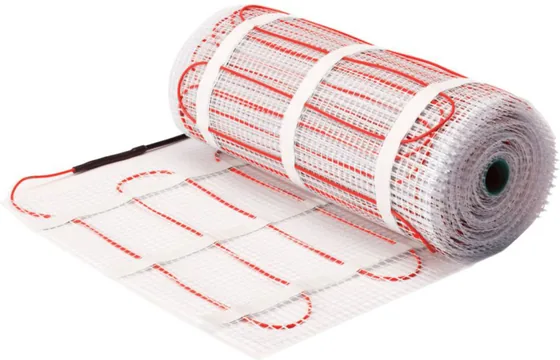 Under tile heating mats
Cable in a screed
On a timber floor over a ventilated space a screed adds the mass that floor does not have. In screed heating cable is laid out across the room first, and the topping goes over the top of it.
 In screed heating cable
Cable in a slab
About 129 new houses a year are approved here and no apartments have been approved since 2019. Where the ground allows a slab, in slab heating cable goes on before any concrete is booked.
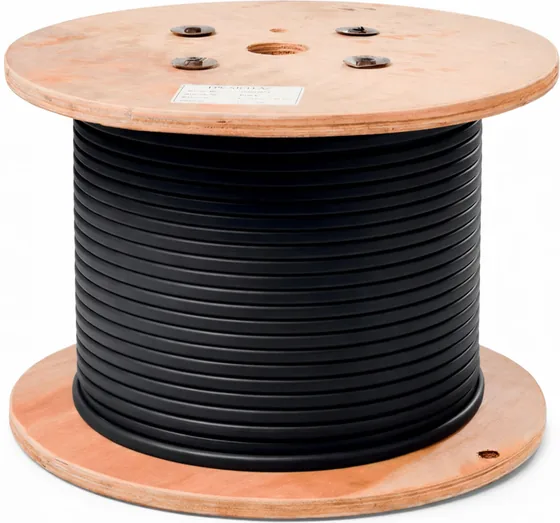 Slab heating cables, dual core
Why Blue Mountains properties choose us
We install across Blue Mountains and the rest of the Blue Mountains, and we size every job from your floor plans before we quote. Installation is always subject to checking installer availability, which we do before we agree a day.
How we install underfloor heating in Blue Mountains
Plans first, then a quote
Send us the plans for your new home, renovation, office or hotel. We measure the heated areas from them, calculate the cable size and quote the materials. If you want us to install, a second quote covers the installation labour. Nothing is ordered and no day is booked until you accept.
Installation day
Once you accept and tell us the job site is ready, we agree a day, subject to checking installer availability. The floor has to be prepared and ready before that day: your own trades handle levelling, waterproofing and anything else above the slab. Our installer lays the cable or the mat, fits the thermostat, and tests the system with our own equipment before leaving site. Your tiler covers it with the screed or the tile bed.
In a strata building the path is different again
In a New South Wales strata scheme the lot boundary generally sits at the upper surface of the floor. The slab underneath belongs to the building rather than to you. We lay the mat into the tile bed instead of touching that slab, and nothing is drilled or chased into it. Installing hard flooring, and the wiring and power points that come with it, is a minor renovation under the Strata Schemes Management Act 2015. Waterproofing is carved out of that definition, so a full bathroom rebuild goes to a special resolution rather than an ordinary one. Your builder or project manager deals with the owners corporation, and we build to whatever that approval allows.
Two sets of hours, and the newer one is shorter
Most consents issued through 2025 and 2026 here set work at 7am to 6pm on weekdays and 8am to 3pm on Saturday. The standard conditions written since August 2026 are shorter, at 7am to 5pm on weekdays. There is no Sunday or public holiday work either way, and no permit exists to work outside those hours. So the consent on your own job is the document that governs rather than the general rule. Asbestos is the other thing that moves a date here, because Council's plan notes that domestic building materials made before 1987 commonly contain it. Council takes bonded sheet at Blaxland by appointment and does not take it at Katoomba. A bathroom floor in a house of that age is checked before anything is lifted. Under tile heating mats are laid once that check is done, which puts it ahead of our day.
Underfloor heating for Blue Mountains homes
The most house dominated area we have written up
Flats are 3.1% of homes here and separate houses 92.1%, which is the widest gap between the two of any area we cover. There is no block of flats here above eight storeys at all. Owners hold 40.9% of homes here outright, the highest share of any Sydney area we cover, and 17.8% of homes are rented. About 129 new houses a year are approved against some 31,400 already standing. That is roughly four tenths of one per cent a year, so the stock turns over very slowly. So under tile heating mats and in screed heating cable are what nearly every job here calls for.
The towns climb a thousand metres along one road
Homes here run from about 150m at Lapstone to about 1,070m at Blackheath and Bell. Just over half of them sit at 600m or higher and about 35% at 900m or higher. Katoomba is the largest town at 4,694 homes, with Springwood at 3,535 and Blackheath at 2,913. Springwood's closed station at 320m averaged 6.6°C on July nights, four degrees milder than Katoomba. No station has ever covered the towns between Linden and Bullaburra, so those two figures are the bracket they sit inside. In screed heating cable suits the colder upper towns, where a timber floor has no mass of its own.
The oldest houses sit on piers with a fire at the front
Council describes a Federation cottage here as raised on stumps or brick piers. It had a fireplace to the front rooms and another to the rear kitchen. Bathrooms were under skillion roofs at the back or in a separate building outside. The post war layer is modest brick or fibro, sometimes with a garage underneath. The 1970s and 1980s then added brick and concrete tiled project homes. Council names timber weatherboards, brick, sandstone and fibro walls under corrugated iron and Marseille tile roofs. One precinct at Katoomba is required to be built on solid brick or stone bases around its sub floor areas. Under tile heating mats, in screed heating cable and in slab heating cable each suit a different one of those floors.
Winter mornings in Blue Mountains
Katoomba's station stands inside this area at 1,017m, and Mount Boyce above Blackheath stands at 1,080.
- July nights
2.6°C at Katoomba station 063039 inside this area, against 8.1°C at Observatory Hill in the city. A tiled floor sits close to that overnight, and it is the first thing a bare foot meets in the morning.
- Frost
37 nights a year at or below 2°C at Katoomba and 40 at Mount Boyce, and 11 a year at or below zero. The overnight low is what decides how cold the floor is at seven in the morning.
- Summer
About three days in five years at or above 35°C at Katoomba, against 3 a year at Observatory Hill. Heating is a winter item here, and a thermostat on a timer draws nothing for the rest of the year.
- Climate zone
Zone 6 across the whole area under the building code, but the energy rating zone changes at Faulconbridge. Insulation under the heating is what keeps the warmth in the room, and it is sized from that zone.
Get a free quote in Blue Mountains
Tell us what you need done in Blue Mountains and we will get back to you with a price as soon as we can. There is no obligation to go ahead.
Services we provide in Blue Mountains
New home builds
Home renovations
Bathroom renovations
Apartments
Hotel bathrooms
Office buildings
Cold storage and frost heave
Suburbs we service in Blue Mountains and surrounds
We install across the Blue Mountains and the surrounding localities, and we check installer availability before we agree a day. If your suburb is not listed below, contact us and we will confirm coverage.
Frequently asked questions about Blue Mountains
Do you cover every suburb in the Blue Mountains area?
Yes. We install across the Blue Mountains and the surrounding localities, including every suburb listed on this page. We check installer availability before we agree a day, which is the one condition that travels with every job. If your suburb is not shown, contact us with the address and we will confirm coverage before we quote.
What are your service hours in Blue Mountains?
Our hours are Monday to Friday, 8am to 5:30pm, and we are closed on Saturday and Sunday. Plans and photographs can be sent at any time through the quote form on this page. If you need us on site in Blue Mountains, the day is agreed once we have checked installer availability. It is worth sending the plans as early as you can.
Does the new gas rule apply to my renovation?
No, not as a requirement. Council's plan applies the rule to a new residential dwelling, for applications lodged after 1 October 2026. For alterations and additions it only encourages the same choice. A new secondary dwelling can still use gas where the main house already has it. Existing homes are not touched at all. So a renovation here is still a free choice, and under tile heating mats will not need changing under a later rule.
Why is the heating allowance different further up?
Because the scheme follows postcodes rather than altitude, and the line falls at Faulconbridge. Everything west of there is modelled on Canberra's climate zone and everything below it on Richmond's. The modelled heating allowance for a slab goes from 56 megajoules per m² a year to 117. The figure for the city is 26, so an upper mountains house is modelled against more than four times it. The benefit of in screed heating cable up there is mass, which holds heat for hours.
Which internal work needs no application here?
More than you might expect, because Council publishes a table of it. Maintaining or upgrading a bathroom needs no application, and nor does removing or replacing a floor covering. Taking up the floorboards themselves is not on that list, and nor is wiring that breaks into a floor, wall or ceiling lining. 173 of the 816 listed items here name interiors, so the inventory sheet for your own item settles it. So under tile heating mats go in without an application for the covering.
What happens on a block too steep for a slab?
The floor is designed to step, and often to sit above a ventilated space. Council's plan rules out slab on ground on slopes steeper than one in ten. Above one in five the plan wants a split level design, with the floor raised over a protected space. In screed heating cable goes into a suspended floor exactly as into one on the ground. The benefit is the same warm surface, with insulation under the cable instead of earth.
Is a wood heater still allowed up here?
Yes, and the rules on it are the lightest of any area we cover. A licensed installer can fit one that meets the two Australian Standards on a home that is not listed. It only has to be registered with Council afterwards, and a listed item needs full approval instead. Council's plan carries no wood heater control at all. What a heater does not do is warm the floor, and under tile heating mats are what reach a bare foot first.
Explore our other Sydney service areas
Ready to get started?
Get a free quote for your job in Blue Mountains, or call now and speak to someone who can help.