Electric underfloor heating in North Sydney
We supply electric underfloor heating across North Sydney, where a new home has had to run on electricity alone since July 2026. Flats are 75.7% of homes here, so under tile heating mats go into the bathroom of a flat, a terrace or a semi. Mornings here are the mildest on the north shore and the tiles are cold anyway. A tiled floor holds the overnight temperature until something warms it. We put under tile heating mats into Neutral Bay walk up bathrooms and Milsons Point tower bathrooms alike.
The benefits of electric underfloor heating in North Sydney
Flats are 75.7% of homes here and separate houses only 11.1%, with terraces and semis outnumbering the houses. Most of the reasons below come from rules Council has written in the last two years. The rest come from how little height and space a small flat has to give up.
A new home here must run on electricity
Council's plan has said since 1 July 2026 that new residential accommodation must only use electricity for its operational needs. In slab heating cable meets that clause outright, because there is no flue, no gas line and nothing burning anywhere in it. The clause names cooking, space heating and water heating, and it covers the replacement of an existing dwelling. Where the work is only an alteration, the plan asks that replacing gas appliances is considered rather than required.
Changing a floor covering needs no application
Council's heritage controls list the removal or replacement of floor coverings as work needing no application. The benefit for under tile heating mats is that they go in with the new tiles, as part of the work that list names. Floorboards attached to joists or to a slab are the one exception to it. There are about 1,089 heritage items here, and Council says a listing covers the interior, so get its written confirmation first.
The flood policy names heating by name
Council's floodplain policy says heating systems should be installed above the designated flood planning level. The benefit of under tile heating mats is that nothing bulky has to be found a dry position above that line. Wiring, outlets and our thermostats go above it, or are rated for immersion with residual current devices. The flood planning area here covers 722 building lots, so we settle which level applies before quoting.
Almost every floor here is one that exists
Flats are 75.7% of homes here, which is second in the state, and about 86% of them already stood in 2006. The benefit of under tile heating mats is that they add floor heating to a bathroom in a building somebody else also lives in. No part of it is drilled into the slab or chased into a shared wall.
Plant goes in the basement and not the balcony
On a new flat building Council's standard condition puts all plant and equipment inside the basement. That rules out a balcony and the roof for anything that needs a condenser. Floor heating has no plant at all, so there is no basement space to find for it. Council's impact noise rule then exempts the floor of a kitchen, bathroom, toilet or laundry in a home.
An off peak circuit is rare on this side
Only 6.4% of households here have a controlled load or off peak circuit, the second lowest share on the network. Council's own strata case study names under floor or slab heating among the loads such a circuit can run. The benefit of our thermostats is that a timer does the same job on an ordinary circuit, without rewiring the board. They bring floor heating up before the evening and then let the tiles hold it.
What we would supply in North Sydney
Three homes in four here are a flat, so the floor we heat is almost always one that exists.
A heating mat under the tiles
A bathroom in a flat somebody else lives above is the job we are asked for most here. Under tile heating mats are laid into the tile bed, and the heating cable itself is never cut to fit.
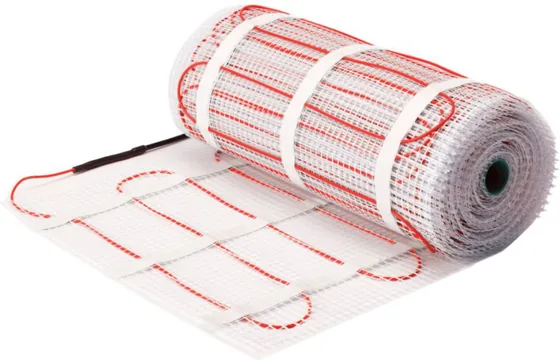 Under tile heating mats
Heating cable in a screed
Terraces and semis are 12.7% of homes here and outnumber the separate houses outright. In screed heating cable suits a rear addition on one, because the topping gives a timber floor the mass it lacks.
 In screed heating cable
Heating cable in a slab
About 10 new houses a year are approved here, the fewest of any area we cover. In slab heating cable has to be decided before the concrete is booked, which makes it the rarest job here.
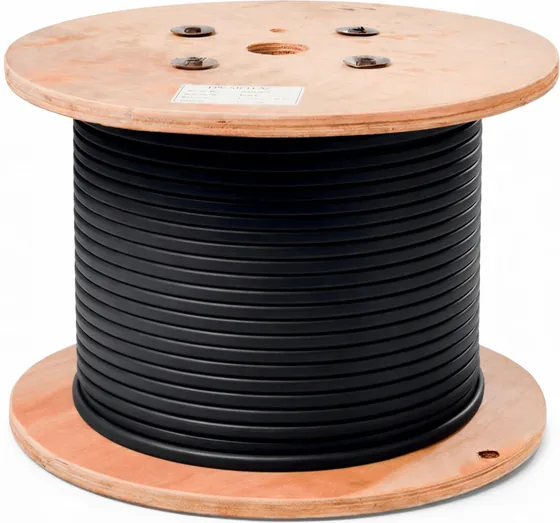 Slab heating cables, dual core
Why North Sydney properties choose us
We arrange installation across North Sydney and the rest of the North Sydney area, and we size every job from your floor plans before we quote. Installation is always subject to checking installer availability for your area, and that happens before we agree a day.
How underfloor heating is installed in North Sydney
Plans first, then a quote
Send us the plans for your new home, renovation, office or hotel. We measure the heated areas from them, calculate the cable size and quote the materials. If you want the installation arranged, a second quote covers the labour. Nothing is ordered and no day is booked until you accept.
Installation day
Once you accept and tell us the job site is ready, we agree a day, subject to checking installer availability. The floor has to be prepared and ready before that day: your own trades handle levelling, waterproofing and anything else above the slab. The contractor lays in screed heating cable, in slab heating cable or under tile heating mats, and fits one of our thermostats. The system is tested with the contractor's equipment before anyone leaves site. Your tiler covers it with the screed or the tile bed.
In a strata building the path is different again
In a New South Wales strata scheme the lot boundary generally sits at the upper surface of the floor. The slab underneath belongs to the building rather than to you. The heating mat goes into the tile bed instead of touching that slab, and nothing is drilled or chased into it. Installing hard flooring, and the wiring and power points that come with it, is a minor renovation under the Strata Schemes Management Act 2015. Waterproofing is carved out of that definition, so a full bathroom rebuild goes to a special resolution rather than an ordinary one. Your builder or project manager deals with the owners corporation, and we build to whatever that approval allows.
The skip has two weeks and a colour
A skip here needs five business days of notice and may stay a maximum of two weeks. It must be yellow, orange or white and no more than 1.8m wide. Out of hours work needs three working days of notice and is granted for one off events only. The weekday runs 7am to 5pm and the Saturday 8am to 1pm. In the business zones the weekday runs to 7pm and internal fit outs to 9pm. There is a tradesperson vehicle permit here, which is unusual on this side of the harbour. Because all those dates are knowable in advance, we order the floor heating to one day in the programme.
Underfloor heating for North Sydney homes
The densest area we cover and the smallest homes
Flats are 75.7% of homes here and 24.2% of all homes sit in blocks of nine storeys or more. Separate houses are 11.1% and terraces and semis 12.7%, so the terraces outnumber the houses. The average home has 2.2 bedrooms and 22.3% of them have one. Milsons Point is 93.6% towers and the St Leonards part 88.3%. Cammeray is the most house like suburb here at 24.9% houses, and even there we mostly fit under tile heating mats.
Walk ups on the points and terraces on the slopes
Kurraba Point is 44.2% three storey walk ups, Cremorne Point 40.2% and Wollstonecraft 34.6%. Waverton is 32.6% semis and terraces, McMahons Point 23.6% and Lavender Bay 23.3%. Crows Nest holds the most semis of any suburb here, at 622. About a fifth of the homes in the harbourfront suburbs were empty on census night. Each of those is a different bathroom, and under tile heating mats are what goes into all of them.
What the heritage list reaches and what it does not
Council says a heritage item listing covers the entire property, including the land, gardens, site features and building interiors and exteriors. Its own controls then put the removal or replacement of floor coverings on the list of work needing no application. That exemption stops at boards fixed down to the structure. Kitchens and bathrooms sit on that same list as well. A 2026 panel decision asked that new floors be reversible and float over the original to allow future removal. Under tile heating mats float inside the tile bed, which is precisely the reversible floor that decision asked for.
Winter mornings in North Sydney
Observatory Hill is 1.6km from Milsons Point and 4.4km from Cammeray, and Riverview is the fairer second reference for the inland ridge.
- July nights
8.1°C at Observatory Hill, between 1.6km and 4.4km from every suburb here, and 6.4°C at Riverview on the inland side. A tiled floor sits close to that overnight, and it is the first thing a bare foot meets in the morning.
- Frost
Observatory Hill records none at or below 2°C, and Riverview on the ridge about three nights in five years. The overnight low is what decides how cold the floor is at seven in the morning.
- Climate zone
Zone 5 on all land here, from Kirribilli up to Cammeray and Crows Nest. Insulation under the heating is what keeps the warmth in the room, and it is sized from that zone.
Get a free quote in North Sydney
Tell us what you need done in North Sydney and we will get back to you with a price as soon as we can. There is no obligation to go ahead.
Services we provide in North Sydney
New home builds
Home renovations
Bathroom renovations
Apartments
Hotel bathrooms
Office buildings
Cold storage and frost heave
Suburbs we service in North Sydney and surrounds
We arrange installation across the North Sydney area and the surrounding localities, and we check installer availability before we agree a day. If your suburb is not listed below, contact us and we will confirm coverage.
Frequently asked questions about North Sydney
Which floor coverings can go over underfloor heating?
Tiles and stone suit it best, because they pass heat through quickly and take the temperature without trouble. Engineered timber, laminate and vinyl all work where the maker rates them for underfloor heating and gives a maximum surface temperature. Carpet works as well, as long as the carpet and its underlay together are thin enough to let the heat through. Tell us what is going down and we will say which system suits it and what our thermostats are set to.
Can I use my own electrician?
Yes. Plenty of customers buy the heating from us and have their own licensed electrician connect it. Every product is supplied with its own installation guide and your electrician works to that. Our warranty does not depend on who does the installing. It asks for a competent installer, the product's own directions, the wiring rules and an RCD protected circuit.
Does the all electric rule apply if I am renovating?
No, not as a requirement. The plan applies the electricity only rule to new residential accommodation, including the replacement of an existing dwelling. Where the work is an alteration or addition, it asks that replacing gas appliances is considered rather than required. Council resolved in February 2026 to explore extending it to alterations and to non residential buildings. Floor heating meets whichever version arrives, because no part of our system burns gas at any point.
Can I replace the floor covering without an application?
Yes, on Council's own list. Removal or replacement of floor coverings is named as work needing no application. Fixed boards are the exception. Maintenance or upgrade of a kitchen or bathroom is on the same list. On a listed item Council says the listing covers the interior, so get the written confirmation anyway. Under tile heating mats sit inside the tile bed, so the floor above the original stays reversible.
Why does the flood level matter to a heated floor?
Because Council's policy names heating in it. The floodplain policy says heating and air conditioning systems should be installed above the designated flood planning level. Wiring and power outlets go above it too, or are rated for immersion below it. For habitable rooms that level is the one in a hundred year flood plus 300mm. The flood planning area covers 722 building lots, and we set our thermostats and the circuit above that level.
Does a floor cost much on a bill this small?
No, though it shows a little more than elsewhere, because the bills here are small. Homes in this area use 10.9 kilowatt hours a day against 13.6 across the network, which is the second lowest of any area. Only 6.4% have a controlled load circuit to run heating on cheaply. So the timer does that work instead, bringing the floor up before the evening and letting it hold. We size the heated area from your plan, so you know what floor heating adds before ordering.
How much height does the floor lose at the door?
Almost none with an under tile heating mat, which is why it is the usual answer here. Three homes in four in this area are a flat, and they are the smallest homes of any area we cover. There is rarely height to give away at a threshold. An under tile mat sits inside the tile bed itself and adds very little to it. In screed heating cable adds more height, so that choice is settled before the door and the waste are set.
Explore our other Sydney service areas
Ready to get started?
Get a free quote for your job in North Sydney, or call now and speak to someone who can help.