Underfloor heating for new home builds
We supply and install electric underfloor heating in new homes across Sydney, surrounding NSW and Canberra. In slab cable is tied to the reinforcing mesh and cast into the floor, so it goes in before the concrete arrives. Miss that day and in slab is off the table on that floor for good. The job becomes a screed system or mats at tiling instead. We size the cable from your plans, test it on site before we leave, and our installer connects the circuit.
In slab heating cable
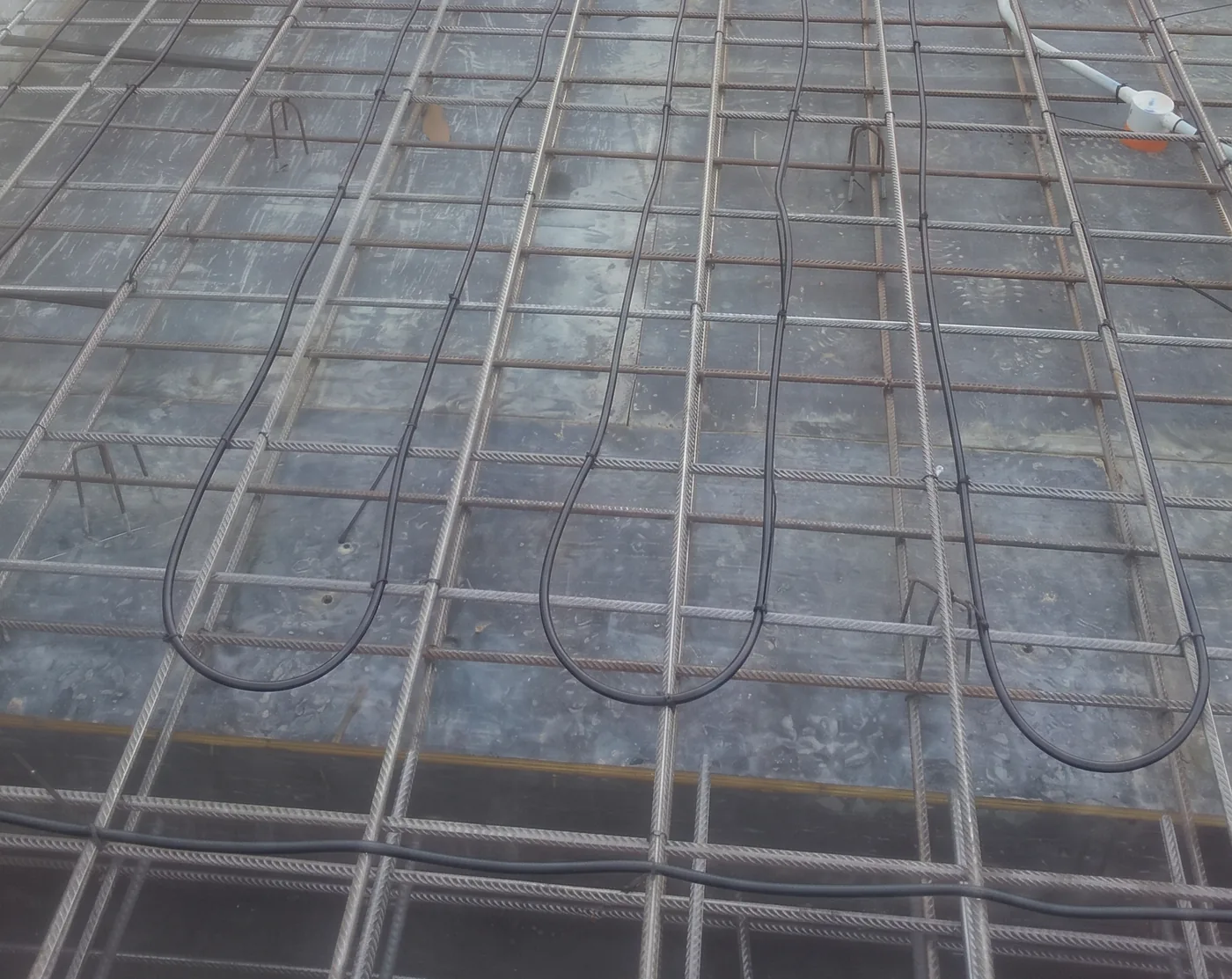
We turn the floor slab itself into the heater, with cable cast into the concrete. We tie it to the top layer of the reinforcing mesh at 200mm spacing, which is the spacing of the mesh itself. The concrete then goes over it, leaving at least 30mm of cover. A slab holds heat for hours after the power goes off. That suits a home heated overnight, or through the cheaper part of the day. It is the one system we can only install on a new build, because the concrete has to be poured over it.
- 40W per linear metre, single core
- 30W per linear metre, dual core
- Laid at 200mm, the spacing of slab mesh
- At least 30mm of concrete cover
- At least 4 weeks before first switch on
- Cable monitor fitted on every job
In screed heating cable
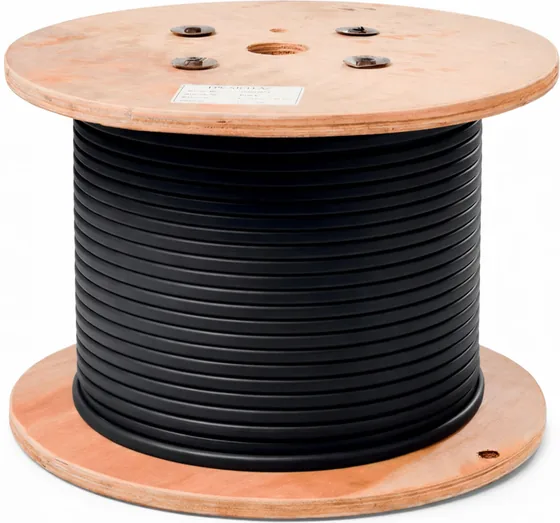
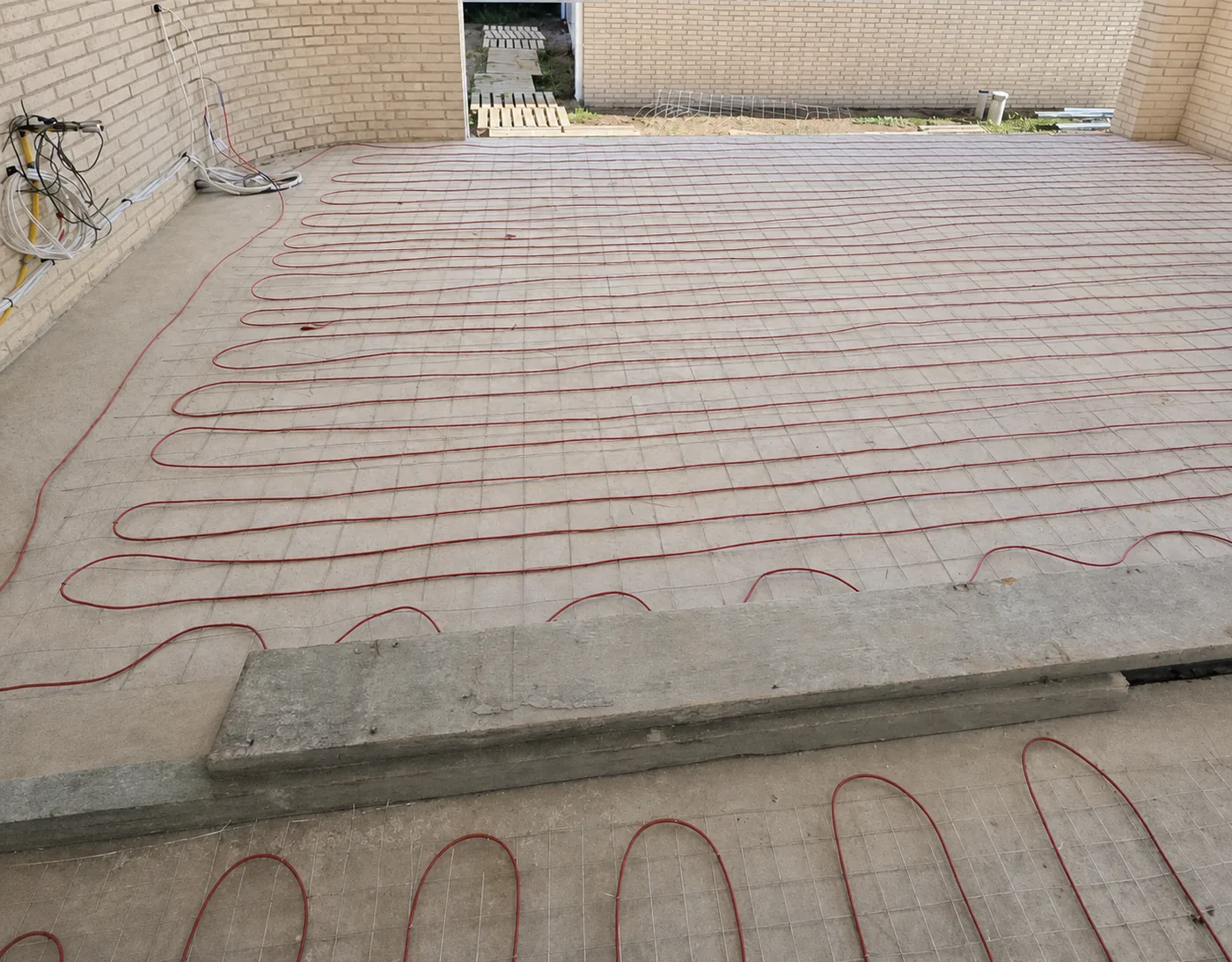
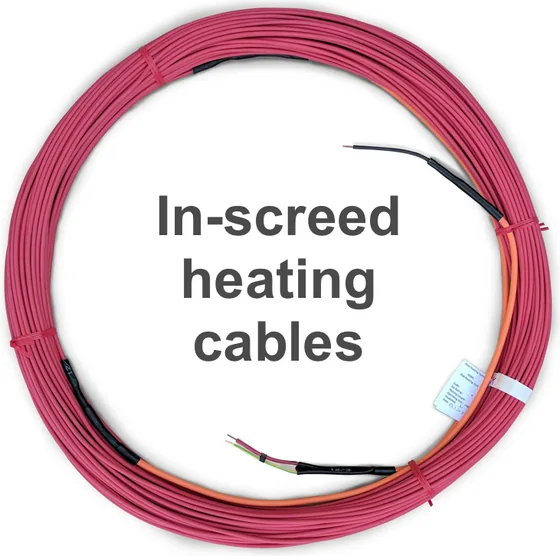
We lay in screed cable on top of an existing floor. Your tiler then lays the sand and cement screed over it, which embeds the cable. It suits an upper floor on a suspended slab, and a ground floor where the pour has already happened. We run it at 200mm spacing, and it puts out 30W per linear metre. Because it is loose cable we can set it around a curved wall, a kitchen island or a run of fixtures. It warms faster than a slab and still holds heat longer than a mat does.
- 30W per linear metre
- Laid at 200mm spacing
- At least 30mm of cement screed over it
- For upper floors and finished slabs
- Laid around fixtures and curves
- Fixed down before the screed goes on
Under tile heating mats
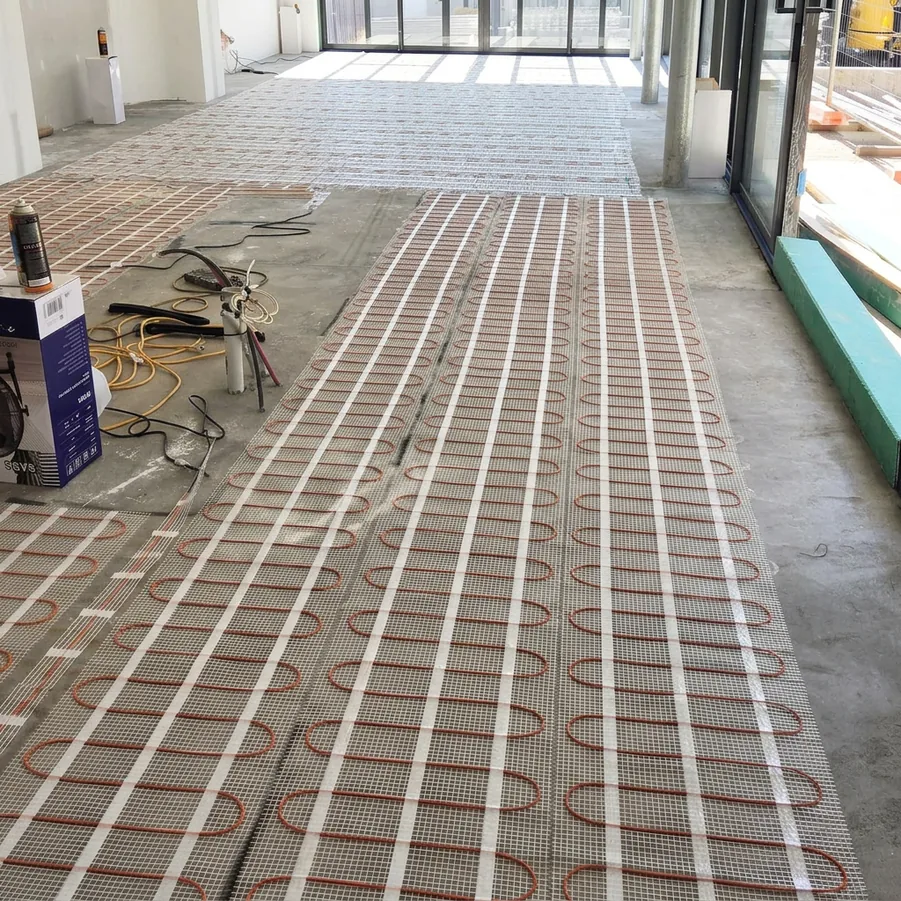
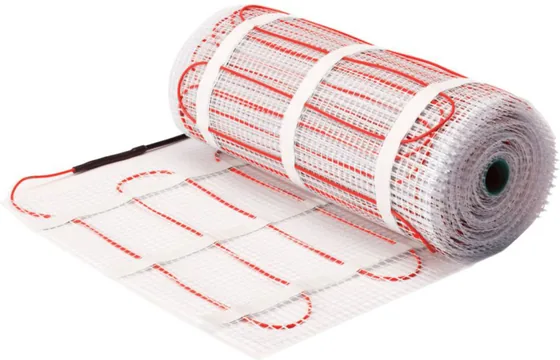
We supply heating mats as cable already spaced on a mesh backing, 3mm thick and rated at 200W per square metre. We roll the mat out over the floor and your tilers cover it with the tile bed or a thin screed. It is the fastest of the three to install and to warm up. That suits bathrooms, ensuites and laundries in a new house. We cut the mesh to turn the mat around a corner and we never cut the cable. We lay mats at the tiling stage, so they are the last part of the heating to go in.
- 200W per square metre
- 3mm thick
- Pre spaced cable on a mesh backing
- Cut the mesh, never the cable
- Bathrooms, ensuites and laundries
- Laid at the tiling stage
Why builders and owners call us at plan stage
Our slab pour is booked
We size and lay the cable to your slab plan, and test it before the concreter arrives rather than after the floor has gone hard.
The plans already call for in slab heating
We read the drawings and the energy certificate, then quote the cable, the thermostat and the conduit your electrician has to leave in the wall.
We are building all electric in Canberra
We install across Canberra, where a new home cannot be connected to gas and the heating has to be electric.
The floors are polished concrete and big tiles
We heat the hard floors that stay cold for months, and size the cable from the heated area rather than the room.
The slab is down and we missed the pour
We install a screed system or heating mats at the tiling stage instead, which is a different cable and a different plan.
Our own electrician is doing the wiring
We supply the cable and the thermostat with the installation guide for each, and your own electrician works to those.
What a new build job involves
The cable goes in before the pour
We tie the cable to the top layer of the reinforcing mesh and the concreter buries it. We finish and test it the day before the pour, not on the morning of it. That single date is why a new build enquiry belongs at plan stage rather than at lock up.
Two conduits go in before the walls are lined
We run two 20mm conduits, and one carries the cold tail from the thermostat down to the floor. The other holds the floor sensor in a capped tube, so the sensor can be replaced later without lifting a single tile. We set the thermostat between 1400mm and 1600mm off the floor, and both have to be in the wall before the plasterer arrives.
Tested on site, and photographed
We fit a cable monitor on every job we install. Our own equipment tests the cable while it is going in, and again once the installation is finished. We photograph the layout as well. One installer lays about 50m² of cable in a day, so we watch a large floor across several days rather than once at the end.
Its own protected circuit
We run the heating on a protected circuit of its own, and larger areas need a contactor at the switchboard. That work is done by our installer, who fits underfloor heating all week rather than now and then.
Insulation at the slab edge is the builder's item
We tell you early that a heated slab on ground has to carry insulation around its edge, and that includes a waffle pod slab. Your builder allows for it before the formwork goes up, rather than finding out at inspection.
Get a free quote
Tell us what is happening and we will get back to you with a price as soon as we can. There is no obligation to go ahead.
Service available across every Sydney region
Inner West and the city
Burwood, Canada Bay, Inner West, Strathfield and Sydney CBD
Eastern suburbs
Randwick, Waverley and Woollahra
St George and the Sutherland Shire
Bayside, Georges River and Sutherland Shire
North Shore and Northern Beaches
Hornsby, Hunters Hill, Ku-ring-gai, Lane Cove, Mosman, North Sydney, Northern Beaches, Ryde and Willoughby
Western Sydney
Blacktown, Blue Mountains, Cumberland, Hawkesbury, Parramatta, Penrith and The Hills
South Western Sydney
Camden, Campbelltown, Canterbury Bankstown, Fairfield, Liverpool and Wollondilly
Outside Sydney
Canberra, Central Coast, Goulburn, Shoalhaven, Southern Highlands and Wollongong
Frequently asked questions
When should we call you about a new build?
At plan stage, before the slab is set out. We design and install underfloor heating for new homes across Sydney, surrounding NSW and Canberra. The design is settled before the concreter books a pour. Send us the floor plans and we work out the heated areas and the cable size, then quote the materials. A quote takes one to two business days from the time the plans arrive.
Can we still have underfloor heating if the slab is already poured?
Yes. In slab cable is out once the concrete has gone off, because it has to be cast into the slab. A screed system or heating mats can still go in on top, at the tiling stage. Both add a little height to the finished floor, so doorways, thresholds and the step at a shower need checking first. Send photos and the plans and we will tell you which of the two fits.
Do we need a separate circuit for the heating?
Yes. Underfloor heating runs on its own protected circuit rather than sharing one. A larger heated area needs a contactor at the switchboard, which can be done by our installer. In a house being built, the circuit is planned with the rest of the electrical rough in rather than added at the end.
How long does a heated floor take to warm up?
Allow 24 hours to be sure of it. A slab is slow to warm and slow to cool. Many systems run overnight, or through an off peak or time of use window, which spreads the warm up. Once the floor is up to temperature the thermostat holds it there, so the long wait happens once rather than every morning.
Can our own electrician install the heating?
Yes. Plenty of customers buy the cable and the thermostat from us and have their own installer connect it. Every product we supply comes with its own installation guide, and their installer works to that. Laying it correctly is then their responsibility rather than ours, and so are the testing and the sign off. We cannot take responsibility for work carried out by somebody else.
Who tests the cable, and what do we get at the end?
We test it with our own equipment before leaving the site. A cable monitor sits on the job throughout, so damage shows up while it can still be dealt with. The layout is photographed before it is covered. On a new build we can also be on site watching the cable while the concrete is poured, if that is what you want.
Ready to get started?
Get a free quote, or call now and speak to someone who can help.