Electric underfloor heating in Cumberland
We install electric underfloor heating across Cumberland, which is split down the Duck River between two electricity networks. About 70% of homes here sit on Endeavour and about 30% on Ausgrid, and the two charge at different hours of the day. Separate houses are 52.0% of homes and flats 32.4%, so the work divides almost evenly between a house and a flat. Council's flood policy names heating in it directly, which few others do. So we lay under tile heating mats in a Merrylands walk up and set cable into a Greystanes slab.
The benefits of electric underfloor heating in Cumberland
Separate houses are 52.0% of homes here and flats 32.4%, with semis and townhouses at 15.1% and nearly three quarters of those at two storeys. Two of the reasons below come from the ground these suburbs sit on. The others follow from what Council has written about heat, about water and about one old estate.
Two networks here, and the river is the border
The Endeavour network covers everything west of the Duck River and Ausgrid everything east of it. Our thermostats are programmable, so the heating hours are set to whichever of those two tariffs you are on. Endeavour charges a peak from 4pm to 8pm on business days and Ausgrid from 3pm to 9pm every day. The benefit is floor heating that runs in your own cheapest hours rather than somebody else's.
The flood policy names heating in so many words
Council's flood policy says heating systems should, as far as possible, sit above the relevant flood level. The same policy lists a concrete slab on ground as a flood compatible form of construction. In slab heating cable goes inside that slab, tied to the reinforcement before the pour. So the benefit is heating that sits in a floor the policy already calls compatible.
Salt is mapped under more than half these homes
Council's plan maps salinity across about 57% of the residential land here, none of it east of the river. Council's own guidance asks for sulphate resistant concrete and 65mm of cover to the reinforcement. In slab heating cable ties to that same reinforcement, so we set it out to work with that cover. The benefit is one set of levels for the engineer, the concreter and the heating alike.
One estate here must keep every chimney it has
Council's controls for the Blaxcell Estate at South Granville say to keep all existing chimneys. Under tile heating mats add no chimney and remove none, so neither control reaches a heated bathroom floor. They also say a second storey addition will not be supported, and that fibro may not become brick. The benefit is that the whole job stays inside the house, where those controls do not look.
The plan asks where a building puts its heat
Council's local plan asks whether a building's heating systems are designed to minimise the release of heat. A unit mounted on a house has to sit at the rear or the side and be screened. Under tile heating mats release their heat into the room above them and nowhere else at all. So the benefit is no outdoor unit to place, nothing to screen and no refrigerant in the house.
About half the flats in this area are walk ups
There are about 11,800 flats in walk up blocks here and about 10,700 in buildings with lifts. A walk up bathroom is usually still the original one, so the retile and the heating happen together. Under tile heating mats go into the new tile bed, so the building's slab is left as it is. The benefit is a warm bathroom floor inside a scope the owners corporation can approve on paper.
What we would install in Cumberland
Flats are 32.4% of homes here and separate houses 52.0%, so the work divides almost evenly between the two.
A mat under the tiles
Under tile heating mats suit the walk up bathrooms that make up much of this area's flat stock. About 11,800 flats here sit in walk up blocks and most of those bathrooms are still original. The mat goes under the new tiles and the building's own slab is not touched at all.
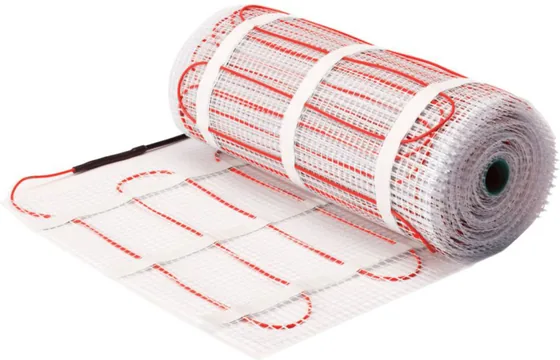 Under tile heating mats
Cable in a screed
In screed heating cable suits a room being added to one of the post war houses in the Holroyd belt. Cable runs through the cement topping, which also adds the mass an old timber floor lacks. That mass holds the heat on after the Endeavour peak has started at four in the afternoon.
 In screed heating cable
Cable in a slab
About 452 new houses a year are approved here, and most replace a house that was already there. On salty land the slab carries Council's own specification and in slab heating cable ties to its reinforcement.
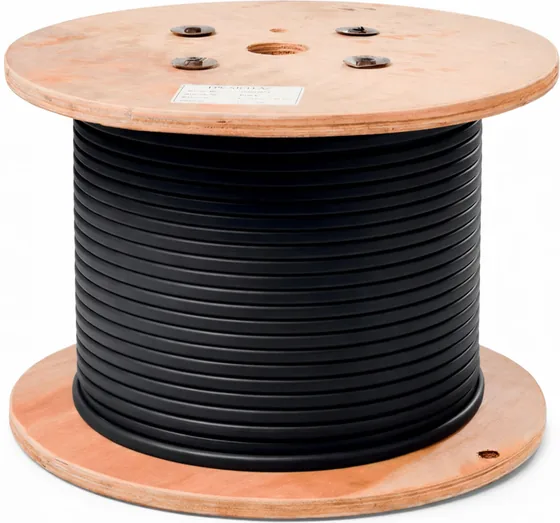 Slab heating cables, dual core
Why Cumberland properties choose us
We install across Cumberland and the rest of the Cumberland area, and we size every job from your floor plans before we quote. Installation is always subject to checking installer availability, which we do before we agree a day.
How we install underfloor heating in Cumberland
Plans first, then a quote
Send us the plans for your new home, renovation, office or hotel. We measure the heated areas from them, calculate the cable size and quote the materials. If you want us to install, a second quote covers the installation labour. Nothing is ordered and no day is booked until you accept.
Installation day
Once you accept and tell us the job site is ready, we agree a day, subject to checking installer availability. The floor has to be prepared and ready before that day: your own trades handle levelling, waterproofing and anything else above the slab. Our installer lays the cable or the mat, fits the thermostat, and tests the system with our own equipment before leaving site. Your tiler covers it with the screed or the tile bed.
In a strata building the path is different again
In a New South Wales strata scheme the lot boundary generally sits at the upper surface of the floor. The slab underneath belongs to the building rather than to you. We lay the mat into the tile bed instead of touching that slab, and nothing is drilled or chased into it. Installing hard flooring, and the wiring and power points that come with it, is a minor renovation under the Strata Schemes Management Act 2015. Waterproofing is carved out of that definition, so a full bathroom rebuild goes to a special resolution rather than an ordinary one. Your builder or project manager deals with the owners corporation, and we build to whatever that approval allows.
A works zone here runs thirteen weeks at a minimum
A works zone in this area needs Traffic Committee approval, which can take up to six weeks. Once granted, the minimum term it runs for is thirteen weeks. That is the longest lead time of any area we cover, so the builder settles it long before our day. Construction hours in the newer consents run 7am to 6pm Monday to Friday and 8am to 4pm on Saturday. Neither a Sunday nor a public holiday is available at all. Working outside those hours needs no permit, and most kerbs here are unrestricted so no trade permit exists. A skip goes through the road occupancy form instead of a permit of its own. Asbestos is the other thing to settle early in the sequence. Council says a home built before 1990 could contain it in walls, bathrooms, ceilings and floors, and it removes up to 10m² free of charge. A bathroom floor of that age is tested first, and only then do we book the day the heating goes in.
Underfloor heating for Cumberland homes
No area we cover is this evenly divided
This area divides three ways, into 52.0% houses, 32.4% flats and 15.1% semis and townhouses. Nearly three quarters of those semis and townhouses are two storeys. No other area we cover sits that close to even across all three. Only 43% of the houses have four bedrooms or more, which is low for a house area. Owners hold 23.4% of homes outright and 43.3% of homes are rented, with two thirds of the flats let out. Social housing is 7.1%, which is fifth in the state by count. So the quote here is written for a landlord about as often as for somebody living in the room. Under tile heating mats suit both, because the work finishes inside the bathroom being retiled.
Three councils were folded into one in 2016
The old Holroyd council contributed 52.6% of the homes standing here today. Another 30.1% came from the part of Auburn south of the M4 and 17.3% from Parramatta's Woodville ward. Adding the predecessors' census counts together overstates the houses here by 63% and the flats by 124%. That is why we use no figure from before the 2016 merger. The Holroyd house belt around Greystanes, Girraween and Guildford West holds 22% of the homes and runs to 71% houses. The rail line suburbs in the north are 55% flats and 55% rented. Granville, Merrylands and Guildford hold 48% of this area's social housing between them. In screed heating cable suits those older house belts, where a new room is added to a floor with no mass.
What the heritage list actually covers
Granville alone carries a hundred of this area's 340 listed items. Six conservation areas sit across about 0.8% of the residential land, and about 185 of the 340 items are dwellings. Not one of them lists an interior, and Council's plan covers only what is visible from the street. Council's own heritage page says something broader, that consent is needed where work alters external or internal building elements. Those two positions do not match, so ask Council first rather than reading either one as settled. So we ask Council first, then lay under tile heating mats into the bathroom tile bed.
Winter mornings in Cumberland
Parramatta North station is the nearest long record to this area, between about four and six kilometres from its northern suburbs.
- July nights
6.3°C at Parramatta North station 066124, the nearest long record, against 8.1°C at Observatory Hill. A tiled floor sits close to that overnight, and it is the first thing a bare foot meets in the morning.
- Frost
8 nights a year at or below 2°C at Bankstown Airport, nearest the southern suburbs, and 2 at Parramatta North. The overnight low is what decides how cold the floor is at seven in the morning.
- Summer
15 days a year at or above 35°C at Horsley Park, just west of Pemulwuy, and 11 at Parramatta North. Heating is a winter item here, and a thermostat on a timer draws nothing for the rest of the year.
- Climate zone
Zone 6 across the whole area, from Auburn in the east to Pemulwuy in the west. Insulation under the heating is what keeps the warmth in the room, and it is sized from that zone.
Get a free quote in Cumberland
Tell us what you need done in Cumberland and we will get back to you with a price as soon as we can. There is no obligation to go ahead.
Services we provide in Cumberland
New home builds
Home renovations
Bathroom renovations
Apartments
Hotel bathrooms
Office buildings
Cold storage and frost heave
Suburbs we service in Cumberland and surrounds
We install across the Cumberland area and the surrounding localities, and we check installer availability before we agree a day. If your suburb is not listed below, contact us and we will confirm coverage.
Frequently asked questions about Cumberland
Do you cover every suburb in the Cumberland area?
Yes. We install across the Cumberland area and the surrounding localities, including every suburb listed on this page. We check installer availability before we agree a day, which is the one condition that travels with every job. If your suburb is not shown, contact us with the address and we will confirm coverage before we quote.
What are your service hours in Cumberland?
Our hours are Monday to Friday, 8am to 5:30pm, and we are closed on Saturday and Sunday. Plans and photographs can be sent at any time through the quote form on this page. If you need us on site in Cumberland, the day is agreed once we have checked installer availability. It is worth sending the plans as early as you can.
What about the upstairs floor in a two storey semi?
That is a mat or a screed, never a slab. Semis and townhouses are 15.1% of homes here and nearly three quarters of them are two storeys. An upstairs bathroom sits on a timber or a suspended concrete floor rather than on the ground. A mat goes into the tile bed either way and adds very little height. What changes is the insulation under it, because there is a room below rather than earth.
Which network am I on, east or west of the river?
Endeavour west of the Duck River and Ausgrid east of it. Endeavour has 1,109 substations west of it and not one east of it. Auburn, Lidcombe, Berala, Regents Park and Rookwood are the Ausgrid suburbs. Granville, Merrylands, Guildford, Greystanes, Wentworthville and Westmead are on Endeavour. One street name turns up on both sides, so check the bill if your road runs down to the river.
Does the salinity map change what the slab needs?
Yes, on a new slab or an extension. The salinity map covers about 57% of the residential land, every bit of it west of the river. Council asks for thick plastic as a damp proof membrane, sulphate resistant concrete, and 65mm of cover over the steel. It also warns that watering a garden close to a building can affect its foundations. None of that reaches a bathroom retrofit, where the floor exists and nothing is being poured.
What does the Blaxcell Estate allow me to change?
Less outside than in, and the chimneys are the clearest part. Its controls say every existing chimney stays, and that a second storey addition will not be supported. Fibro can be replaced with fibro or with timber, but not with brick. It was built in 1944 as the state's first Housing Commission group development. Nothing in those controls reaches a floor inside, and a heated one adds no chimney and removes none.
What will the running cost look like on these tariffs?
Less than most people expect, and the measured starting point helps. On the Ausgrid side of this area a home uses 12.3 kilowatt hours a day, against 13.6 across that network. Only 15.4% of those households have a controlled load circuit to run heating on cheaply. There is no equivalent figure published for the Endeavour side, which is about 70% of the homes. So we size the heated area off your plan and set our thermostat to your own tariff hours.
Explore our other Sydney service areas
Ready to get started?
Get a free quote for your job in Cumberland, or call now and speak to someone who can help.