Electric underfloor heating in Sydney CBD
We install electric underfloor heating across the City of Sydney, which runs well beyond the CBD itself. Flats are 78.5% of its homes, so a mat under a bathroom floor is nearly all of what we install. Even here a tiled bathroom floor is cold underfoot at seven in the morning. Almost every job here is under tile heating mats in a bathroom, in a building somebody else manages.
The benefits of electric underfloor heating in Sydney CBD
Flats are 78.5% of the homes in this area and separate houses 2.1%, and the heritage rules reach inside the buildings. Under tile heating mats are the answer in nearly all of them, and the reasons below say why.
One small bathroom is the whole heated area
35,889 homes here are flats in blocks of nine storeys or more, and the homes in them are small. They average 1.8 bedrooms, so a bathroom is often the only tiled room in the whole apartment. Under tile heating mats go into the tile bed of that one room, run by one of our thermostats. The benefit is a warm bathroom floor in a tower where there is no wall to hang a heater on.
A reversible floor inside a listed terrace
Of roughly 2,290 items on Sydney's heritage schedule, 2,018 reach inside the building. The plan asks that new services sit in the less significant parts of a heritage building and be reversible. Under tile heating mats go into a new tile bed and are both of those, with nothing cut into the original structure. A heritage impact statement is asked for with any application in any of the 75 conservation areas. The benefit is a heated Surry Hills terrace bathroom that can be taken out again without loss.
A new building here cannot be served gas
A new home lodged after 31 December 2025 cannot include an indoor gas appliance, and the plan names a space heater. From applications lodged after 31 December 2026 a new home here cannot be served by gas at all. In slab heating cable in a new building meets both dates, because there is no gas in it anywhere. Renovations are expressly excluded, so the benefit for an existing home is that nothing here forces a change.
A timer instead of an off peak circuit
A great many apartment buildings here buy electricity at one gate meter and sell it on to the apartments inside. Ausgrid's controlled load tariffs apply only where a home has its own small customer connection, so that circuit is unavailable. Council states plainly that it has no power to prevent these networks being set up. The benefit is that our thermostats run on a timer, so a Zetland bathroom floor heats only in the hours you choose.
Your own by laws decide the hard flooring
A new apartment building in this area has to achieve floor impact sound of 55 or lower on the weighted rating. In a building that already stands the rules about hard floors sit in your own scheme's by laws instead. Under tile heating mats add nothing to the floor level, so the tiles your by laws allow are the tiles you lay. The benefit is that reading those by laws before the tiles are ordered saves the whole job.
One hotel bathroom layout, repeated floor by floor
A 2022 survey counted 6,639 backpacker beds in this area, and to a guest a heated bathroom floor reads as a finish. A big new hotel lodged from 1 January 2026 has to meet an energy budget of 240 kilowatt hours per square metre a year. Under tile heating mats in a timed bathroom zone fit inside that budget, and a whole guest room floor does not. The benefit on a refurbishment is one bathroom layout worked out once and then repeated floor by floor.
What we would install in Sydney CBD
A mat is the answer in nearly every City of Sydney building, and the two exceptions are worth naming.
A mat under the tiles
Under tile heating mats are the job in nearly every building type here, from a Zetland tower to a Surry Hills terrace. Council's plan says existing floor levels are to be maintained in a heritage warehouse, and a mat sits inside the tile adhesive. The benefit is a warm floor in a warehouse conversion with the level left exactly where it was.
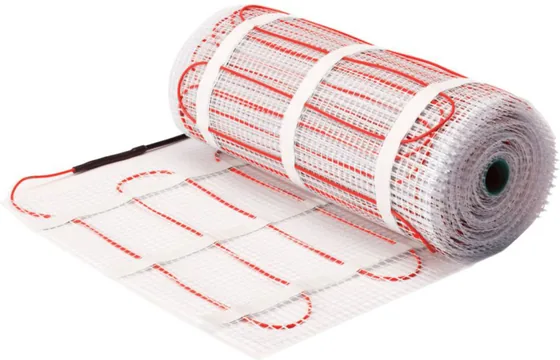 Under tile heating mats
Cable in a screed
The rear ground floor room of a terrace is what Council's plan calls the most traditional place to extend. In screed heating cable goes into the topping where that floor is being rebuilt rather than retiled. The benefit is a Glebe or Erskineville extension floor that holds its heat after the circuit goes off.
 In screed heating cable
Cable in a slab
There are only 2,081 separate houses in the whole City of Sydney, so a new slab is rare here. In slab heating cable is tied to the reinforcement before the pour, so it belongs to a new building. The benefit is heating inside a new slab, settled while the building is still on the drawings.
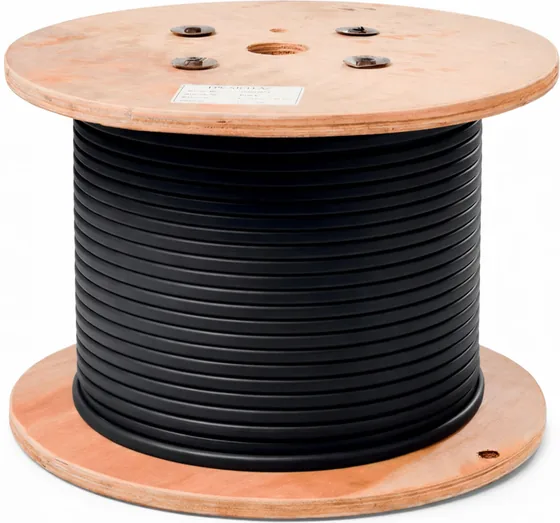 Slab heating cables, dual core
Why Sydney CBD properties choose us
We install across Sydney CBD and the rest of the City of Sydney, and we size every job from your floor plans before we quote. Installation is always subject to checking installer availability, which we do before we agree a day.
How we install underfloor heating in Sydney CBD
Plans first, then a quote
Send us the plans for your new home, renovation, office or hotel. We measure the heated areas from them, calculate the cable size and quote the materials. If you want us to install, a second quote covers the installation labour. Nothing is ordered and no day is booked until you accept.
Installation day
Once you accept and tell us the job site is ready, we agree a day, subject to checking installer availability. The floor has to be prepared and ready before that day: your own trades handle levelling, waterproofing and anything else above the slab. Our installer lays the cable or the mat, fits the thermostat, and tests the system with our own equipment before leaving site. Your tiler covers it with the screed or the tile bed.
In a strata building the path is different again
In a New South Wales strata scheme the lot boundary generally sits at the upper surface of the floor. The slab underneath belongs to the building rather than to you. We lay the mat into the tile bed instead of touching that slab, and nothing is drilled or chased into it. Installing hard flooring, and the wiring and power points that come with it, is a minor renovation under the Strata Schemes Management Act 2015. Waterproofing is carved out of that definition, so a full bathroom rebuild goes to a special resolution rather than an ordinary one. Your builder or project manager deals with the owners corporation, and we build to whatever that approval allows.
Working hours in the city centre and out of it
Construction hours run 7am to 7pm on weekdays and 7am to 5pm on Saturday inside the city centre. Outside the city centre they are 7.30am to 5.30pm and 7.30am to 3.30pm, with nothing on Sundays or public holidays. Working outside those hours is allowed only in exceptional circumstances. On minor residential work with no room on site, a skip may stand on the road for up to 14 days without approval. It may never be placed on a footpath at all. In the Alexandra Canal catchment the rule puts wiring and heating above the flood planning level, so the thermostat sits high.
Underfloor heating for Sydney CBD homes
2,081 separate houses in the whole area
Council calls Millers Point an intact residential and maritime precinct representative of each decade from the 1820s to the 1930s. Darlington it describes as mainly terrace rows and Surry Hills East as rows of late Victorian terraces. Potts Point has grand terraces, and Council wants its predominantly inter war apartment buildings maintained. Potts Point, Elizabeth Bay and Rushcutters Bay hold what Council calls a unique collection of apartment buildings constructed between 1945 and 1975. On 21 September 2026 it approved heritage listing for eight of them, and under tile heating mats suit their bathrooms.
Towers, walk ups, terraces and warehouses
Zetland, Waterloo, Pyrmont, Haymarket, Barangaroo, Ultimo and Chippendale are tower work, on a slab that belongs to the building. Potts Point, Elizabeth Bay, Rushcutters Bay and Darlinghurst are inter war and post war flats with the smallest bathrooms in Sydney. Surry Hills, Redfern, Darlington, Glebe, Erskineville and Alexandria are the terrace streets, and Council counts 20,199 terraces at 78% of all residential buildings. In a converted warehouse it is under tile heating mats and nothing else, because the floor level is fixed.
Who actually decides
64.1% of households in this area rent and only 33.2% own. The last published count of its strata lots, taken in May 2009, found 76,271 of them. That was more than any area in the state, averaging 36 lots to a scheme, and one scheme in ten held 100 lots or more. Council's own audit counts 9,540 social housing dwellings, which is 7.6% of all private dwellings here. So the decision is often a building's rather than a household's, and the people we deal with are builders, project managers and building managers. So we work the heated area out from the floor plan and set out under tile heating mats per bathroom.
Winter mornings in Sydney CBD
Sydney's official weather station stands inside this area, at Observatory Hill, so these are the city's own numbers rather than a neighbour's.
- July nights
8.1°C at Observatory Hill, and 7.4°C at Sydney Airport nearest the southern suburbs. This is the mildest area in Sydney we work in. A tiled floor sits close to that overnight, and it is the first thing a bare foot meets in the morning.
- The daily swing
8.3°C between night and afternoon at Observatory Hill, which is the narrowest of any station we quote. A floor warms slowly, so a timer brings it up before the coldest part of the morning.
- Frost
No nights at or below 2°C at Observatory Hill in an average year, and about one night in three years at Sydney Airport. The overnight low is what decides how cold the floor is at seven in the morning.
- Climate zone
Zone 5 across the whole area, from The Rocks to Erskineville. Insulation under the heating is what keeps the warmth in the room, and it is sized from that zone.
Get a free quote in Sydney CBD
Tell us what you need done in Sydney CBD and we will get back to you with a price as soon as we can. There is no obligation to go ahead.
Services we provide in Sydney CBD
New home builds
Home renovations
Bathroom renovations
Apartments
Hotel bathrooms
Office buildings
Cold storage and frost heave
Suburbs we service in Sydney CBD and surrounds
We install across the City of Sydney and the surrounding localities, and we check installer availability before we agree a day. If your suburb is not listed below, contact us and we will confirm coverage.
Frequently asked questions about Sydney CBD
Do you cover every suburb in the Sydney CBD area?
Yes. We install across the City of Sydney and the surrounding localities, including every suburb listed on this page. We check installer availability before we agree a day, which is the one condition that travels with every job. If your suburb is not shown, contact us with the address and we will confirm coverage before we quote.
What are your service hours in Sydney CBD?
Our hours are Monday to Friday, 8am to 5:30pm, and we are closed on Saturday and Sunday. Plans and photographs can be sent at any time through the quote form on this page. If you need us on site in Sydney CBD, the day is agreed once we have checked installer availability. It is worth sending the plans as early as you can.
Does the City of Sydney's gas rule affect my bathroom renovation?
No. Council's all electric controls apply to new buildings and the plan expressly says they do not reach alterations or additions to an existing one. A bathroom being retiled in a standing home or apartment is not caught at all. The dates that matter are for applications on new homes, offices, hotels and serviced apartment buildings. Under tile heating mats meet the rule anyway, because there is no gas in one at any point.
Can a heated floor go into a heritage listed warehouse apartment?
Yes, and the floor level is why it has to be a mat. Council's plan says existing floor levels are to be maintained in a heritage warehouse, so nothing can be built up to suit a heating system. A mat laid inside the tile adhesive you were using anyway is the one option that leaves the level where it was. A screed is not. We would still want Council's written answer before the old floor comes up.
Do I need a heritage impact statement for work inside my home?
Yes, if it needs a development application. Council asks for a heritage impact statement with any application affecting a heritage item or a property inside one of its 75 conservation areas. That is stricter than the councils around it. 2,018 of its roughly 2,290 listed items reach inside the building, so an interior is often part of the listing. Ask Council what your property is before the old floor is lifted.
Is the city too mild for a heated floor to be worth it?
No, though it is the mildest part of our area. Sydney's official weather station stands inside this area at Observatory Hill. It records a July mean minimum of 8.1°C and no nights at or below 2°C in an average year. So this is comfort rather than necessity, and we would rather say that than pretend otherwise. A tiled floor at 8°C is still cold at 6am, and a City bathroom usually has no wall left for a heater anyway.
Will my owners corporation's by laws have something to say about it?
Yes, probably, and they are worth reading early. In an existing building the rules about hard flooring are in your scheme's own by laws rather than in any Council plan. They differ from one building to the next. A new apartment building has to meet a floor impact sound rating of 55 or lower, which is tighter than the code's own figure. What your own scheme allows is the answer, and it is worth reading before the tiler is booked.
Explore our other Sydney service areas
Ready to get started?
Get a free quote for your job in Sydney CBD, or call now and speak to someone who can help.