Electric underfloor heating in Liverpool
We install electric underfloor heating across Liverpool, where a solid fuel heater needs a certified consultant's odour report in every residential zone. No other council we cover asks for that, and an electric floor needs none of it. About 1,453 new houses a year are approved here and the renovation market is the smallest of all thirty nine areas. Seven weather stations test inside this boundary, and the one at Badgerys Creek records 23 nights a year at or below 2°C. So the concrete is usually still to be poured, and in slab heating cable is what goes into it.
The benefits of electric underfloor heating in Liverpool
Separate houses are 73.1% of homes here and flats 16.3%, with 3,321 of those in blocks of nine storeys or more. Two of the reasons below come from rules about what you may burn and where a slab may sit. The rest come from two weather stations inside one boundary that disagree about winter.
The alternative heater needs a consultant's report
A solid fuel heater in any residential zone here needs an odour impact statement from a qualified air quality consultant. That consultant has to be a Certified Environmental Practitioner or a Certified Air Quality Professional. Under tile heating mats need no statement, no consultant and no flue of any kind. The benefit is that the heating in a Liverpool bathroom goes in without an approval at all.
The slab is usually still ahead of you
Renovation work here is the lowest of any of the thirty nine areas we cover, measured against new building. About 1,453 new houses a year are approved, which is fourth, and 2,282 new homes in all. In slab heating cable is set out on the reinforcement before the concrete arrives, and the finished floor is unchanged. The benefit is that nothing has to be built up afterwards and no step appears at a doorway.
Two stations inside one boundary, two winters
Badgerys Creek station, inside this area, records 23 nights a year at or below 2°C. Holsworthy Aerodrome sits inside the same boundary and records only 7 such nights. Our thermostats hold a floor sensor, so the floor heating runs to the mornings your own street gets rather than an average. The benefit is that the same under tile heating mat is programmed differently at each end of this area.
One precinct rules a ground slab out
Council's plan for Voyager Point says no slab on ground construction is permitted within an overland flow path. It adds that the space underneath must not be filled or enclosed at all. In slab heating cable goes into a suspended floor there exactly as it goes into one on the ground. The benefit is that the heating survives a control that rules out the slab it would normally sit in. With open air below, the insulation under that floor is what we specify first.
Some listings here reach inside the house
There are 89 heritage items in this area and 27 of them are listed including their interiors. On one of those a non structural internal change needs approval, and the design has to come from a registered architect. Under tile heating mats are a non structural change, and we set the layout out on that architect's drawing. The benefit is that the heating is in the application from the start rather than added after consent.
The network here has room for the load
40.2% of houses here have rooftop solar, rising to 56.1% around Austral and Leppington. Only 32 of this area's 1,929 street substations report low headroom, so there is room for the load. Our thermostats can be set to take the cheap middle of the day and nothing else. In slab heating cable holds that heat in the concrete and is still warm the next morning.
What we would install in Liverpool
New house approvals here are fourth of the thirty nine areas we cover. The renovation market behind them is the quietest of the thirty nine.
Cable in a slab
On most of the work here the concrete has not been poured, which makes the slab the normal answer. In slab heating cable is tied into the mesh and its cover is read from the structural drawing.
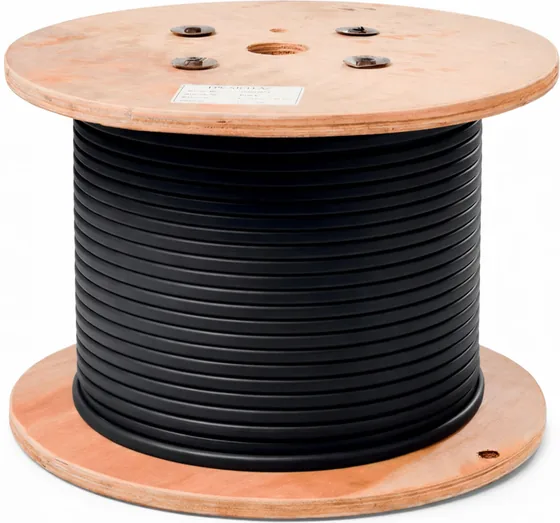 Slab heating cables, dual core
A mat under the tiles
In the older Liverpool, Casula and Green Valley streets the floor is long since down. An under tile heating mat goes into the tile bed and barely changes the finished height.
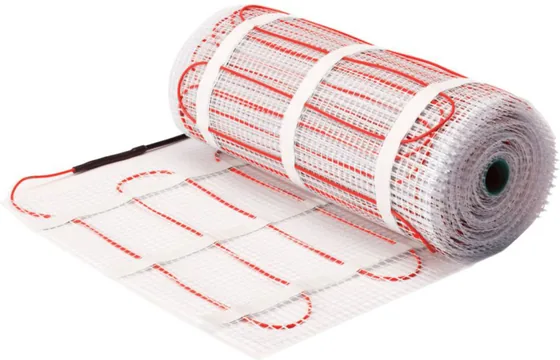 Under tile heating mats
Cable in a screed
A screed suits a room added to one of the 1980s and 1990s estate houses, which hold 34% of the homes here. In screed heating cable runs through the cement topping, and that extra mass is what holds the warmth.
 In screed heating cable
Why Liverpool properties choose us
We install across Liverpool and the rest of the Liverpool area, and we size every job from your floor plans before we quote. Installation is always subject to checking installer availability, which we do before we agree a day.
How we install underfloor heating in Liverpool
Plans first, then a quote
Send us the plans for your new home, renovation, office or hotel. We measure the heated areas from them, calculate the cable size and quote the materials. If you want us to install, a second quote covers the installation labour. Nothing is ordered and no day is booked until you accept.
Installation day
Once you accept and tell us the job site is ready, we agree a day, subject to checking installer availability. The floor has to be prepared and ready before that day: your own trades handle levelling, waterproofing and anything else above the slab. Our installer lays the cable or the mat, fits the thermostat, and tests the system with our own equipment before leaving site. Your tiler covers it with the screed or the tile bed.
In a strata building the path is different again
In a New South Wales strata scheme the lot boundary generally sits at the upper surface of the floor. The slab underneath belongs to the building rather than to you. We lay the mat into the tile bed instead of touching that slab, and nothing is drilled or chased into it. Installing hard flooring, and the wiring and power points that come with it, is a minor renovation under the Strata Schemes Management Act 2015. Waterproofing is carved out of that definition, so a full bathroom rebuild goes to a special resolution rather than an ordinary one. Your builder or project manager deals with the owners corporation, and we build to whatever that approval allows.
The salinity recipe arrived as a consent condition
In September 2026 a new house at Edmondson Park was approved with the growth area salinity controls written straight into its consent. Those controls ask for a high impact waterproof membrane under the slab, carried out to the outside face of the external edge beam. They also ask for a 50mm sand bed, 32 MPa concrete or sulphate resisting cement, and 30mm of cover measured from the membrane. The cure runs for at least three days before anything goes on top of it. Council frames all of it as precautionary and allows a site specific assessment to replace it. So the consent is the document that tells you which version applies to your own lot. A heating cable ties into that same reinforcement, so the cover figure sits on our drawing as well. The hours are straightforward beside a specification like that one. Work runs 7am to 6pm on weekdays and 8am to 1pm on Saturday under a 2026 standard condition. No work is allowed on a Sunday or on a public holiday. There is no out of hours permit and no refundable damage bond on a house. In slab heating cable is ordered to the week the steel is tied and no later.
Underfloor heating for Liverpool homes
Six belts, and two of them hold all the towers
The apartment pockets here are 14% of the homes and hold 82% of all the flats. They also hold 97% of everything in a block of nine storeys or more. There are 3,321 flats in those tall blocks, which is eighth in the state. The old Liverpool ring holds 29% of homes and 57% of the semis. The private estates built between the 1980s and the 2000s hold 34% of homes, at 91% houses. Cecil Hills and West Hoxton reach 82% four bedrooms or more. Under tile heating mats go into the tower bathrooms and in slab heating cable into the estate slabs.
Edmondson Park went from 142 homes to 3,526
Across the decade to 2021 Edmondson Park grew from 142 occupied homes to 3,526, so 96% of it is new. About 79% of the houses standing here in 2021 were already standing in 2006. So the growth is concentrated in a few release areas rather than spread. Houses rose by 11,291 between 2011 and 2021, the third largest increase of any area. In slab heating cable belongs in a release area, where the concrete has not been booked yet.
The airport contour misses every house
Western Sydney International's forecast noise contour covers about 59.5km², which is 19.4% of this area. Not one square kilometre of it is zoned R1 to R4 housing. Greendale carries 69% of it, with the rest over acreage at Luddenham, Badgerys Creek, Bradfield, Kemps Creek and Bringelly. About 45% of Bringelly's large lot village sits inside, almost all in the quietest band. Since May 2026 a granny flat of up to 85m² is allowed in those contours if built to the indoor sound standard. Under tile heating mats make no noise at all, so nothing in those contours reaches them.
Winter mornings in Liverpool
Two open stations sit inside this area, at Badgerys Creek in the west and at Holsworthy Aerodrome in the east.
- July nights
4.3°C at Badgerys Creek station 067108 and 5.5°C at Holsworthy Aerodrome 066161, both inside this area. A tiled floor sits close to that overnight, and it is the first thing a bare foot meets in the morning.
- Frost
23 nights a year at or below 2°C at Badgerys Creek against 7 at Holsworthy Aerodrome, with a low of minus 4.5°C. The overnight low is what decides how cold the floor is at seven in the morning.
- Summer
16 days a year at or above 35°C at Badgerys Creek and 13 at Holsworthy Aerodrome. Heating is a winter item here, and a thermostat on a timer draws nothing for the rest of the year.
- Climate zone
Zone 6 across the whole area, from Holsworthy in the east out to Greendale in the west. Insulation under the heating is what keeps the warmth in the room, and it is sized from that zone.
Get a free quote in Liverpool
Tell us what you need done in Liverpool and we will get back to you with a price as soon as we can. There is no obligation to go ahead.
Services we provide in Liverpool
New home builds
Home renovations
Bathroom renovations
Apartments
Hotel bathrooms
Office buildings
Cold storage and frost heave
Suburbs we service in Liverpool and surrounds
We install across the Liverpool area and the surrounding localities, and we check installer availability before we agree a day. If your suburb is not listed below, contact us and we will confirm coverage.
Frequently asked questions about Liverpool
Do you cover every suburb in the Liverpool area?
Yes. We install across the Liverpool area and the surrounding localities, including every suburb listed on this page. We check installer availability before we agree a day, which is the one condition that travels with every job. If your suburb is not shown, contact us with the address and we will confirm coverage before we quote.
What are your service hours in Liverpool?
Our hours are Monday to Friday, 8am to 5:30pm, and we are closed on Saturday and Sunday. Plans and photographs can be sent at any time through the quote form on this page. If you need us on site in Liverpool, the day is agreed once we have checked installer availability. It is worth sending the plans as early as you can.
What does a wood heater need approval wise here?
More than anywhere else we cover. In any residential zone a solid fuel heater needs an odour impact statement prepared by a suitably qualified air quality consultant. That consultant must be a Certified Environmental Practitioner or a Certified Air Quality Professional. Australian Standard certificates and a site plan showing homes within 15m go with the application. An electric floor needs none of that, no flue and no chimney. It is also the only heating in this area that needs no approval of any kind.
What is the temperature gap across this one boundary?
About three times as frosty, and the two stations are both inside the boundary. Badgerys Creek records a July mean minimum of 4.3°C and 23 nights a year at or below 2°C. Six of those are at or below zero, with a low of minus 4.5°C. Holsworthy Aerodrome records 5.5°C and 7 such nights. Badgerys Creek also logs 16 hot days a year against Holsworthy's 13. So the nearer station is the one to read for your own street.
Why is a new slab the usual answer in this area?
Because the renovation market here is the smallest of all thirty nine. Measured against new building across eight years it is 33rd, while new house approvals are 4th at about 1,453 a year. Edmondson Park alone went from 142 homes to 3,526 in a decade. The cable goes onto the reinforcement before the concrete arrives. Nothing has to be built up afterwards and no floor height is lost. The decision has to come before the concrete is booked.
Can a slab go in on an overland flow path?
No, not at Voyager Point. Council's plan there says no slab on ground construction is permitted within an overland flow path. The space underneath the building must not be filled or enclosed either. It is the only control we have found that forbids a slab rather than specifying one. A suspended floor takes the cable in exactly the same way. The insulation underneath is what changes, because there is open air below rather than earth.
Who has to design work on a listed house here?
A registered architect. Council's plan is explicit that any development on a heritage item has to be designed by one. Twenty seven of the 89 items here are listed including their interiors, and this is the first western area where that happens. Three Federation weatherboard cottages and a bungalow are among them. Even a non structural internal change needs approval on one of them. Notification carries a response within fourteen days. The one conservation area holds no houses at all.
Explore our other Sydney service areas
Ready to get started?
Get a free quote for your job in Liverpool, or call now and speak to someone who can help.